

Zoom introduced its new feature that will bring a different breath to online meetings. Users will be allowed to create artificial intelligence -supported avatars from their photos. These avatars can be used to represent the real person at meetings. Thus, even if it is not ready for the camera, participation will be able to participate. WorkPlace users will have the opportunity to experience this feature in December.
It will be possible to create an avatar by installing photos within the application or taking images directly with the camera. Then this Avatar can be personalized with different professional outfit options. Artificial intelligence, speeches and movements will follow the avatar in a realistic way. However, it will be aimed to make users look more natural at meetings. In addition, Avatars will be presented as a flexible solution for different situations in business life.
Zoom activates the live verification system to ensure security
Zoom takes this feature one step beyond the registered message he introduced last year. At that time, users could only transmit pre -prepared messages through avatars. Now the use of Avatars in live meetings offers a much more advanced experience. The company aims to make the meetings more interactive and personalized. However, it is seen that this development brings some responsibilities.
Smita Hashim, Zoom’s Product Officer, emphasizes the security issue in particular. Live camera verification will be applied to prevent users from using photos of other people. Thus, it will be easily controlled whether the avatar really belongs to the owner. In addition, the meeting screen will have warnings indicating that the person using Avatar is represented by artificial intelligence. In addition, the system will be continuously developed to prevent abuse.
Although the feature will be presented in December, the development process is still ongoing. Hashim says that changes can be made before reaching the end user in registration and verification processes. However, it is observed that the company has taken quick steps on the security side. These measures seem quite critical to ensure the trust of users. On the other hand, how much the processes will affect the flow of meeting will become clear in the future.
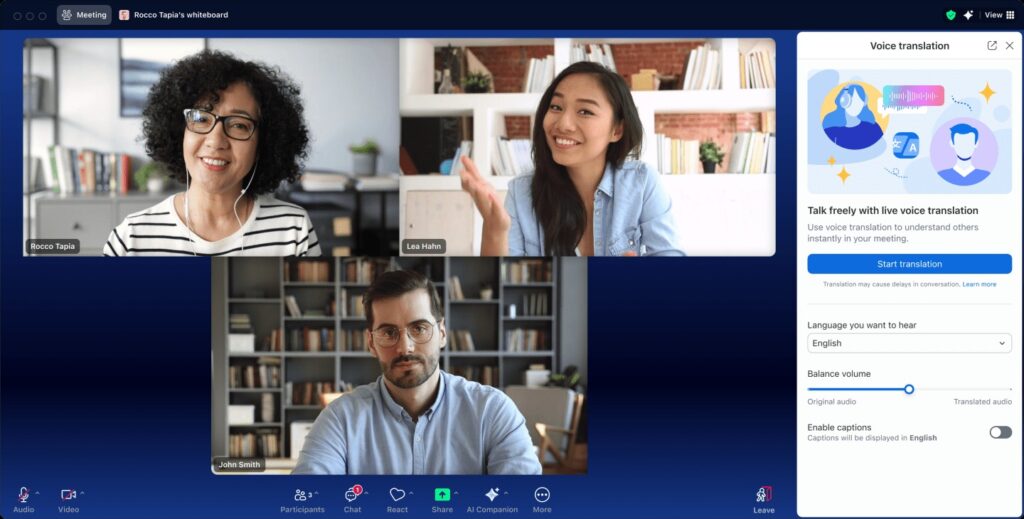
In addition to all these, Zoom will activate the real -time sound translation feature. Thanks to artificial intelligence, speeches will be translated instantly and participants in different languages will be able to communicate easily. In the first stage, English, German, Chinese, French, Spanish, Arabic, Japanese, Portuguese and Italian will be supported. This diversity of language can provide significant convenience in global business meetings. However, language support is expected to expand over time.
In addition, Zoom’s artificial intelligence assistant gains new abilities. This assistant will be equipped with functions such as meeting planning, creating video clips and taking notes. Moreover, not only in Zoom, but also in meetings on different platforms such as Microsoft Teams and Google Meet. This integration has the potential to make workflows more efficient. But to what extent users will adopt these features will be understood over time.
Zoom’s innovative steps clearly reveal the importance of the company to artificial intelligence. The place of online meetings in daily business life is increasing every year. Therefore, it becomes inevitable to develop more practical, more accessible and safer solutions. Avatarlar, translation services and smart assistant stands out as means of responding to this need. In addition to all these, user feedback will also shape the future of these services.
In spite of everything, the ethical debates brought about by artificial intelligence Avatars remain on the agenda. How the user data is processed, expectations of transparency and privacy sensitivity remains important. Zoom is trying to resolve these concerns with security measures. But how quickly users will adapt to this new era is already curious. This table will determine whether artificial intelligence can create a new standard in the meeting culture.