

The models of the Redmi Note 17 series for the global market were announced by Xiaomi. Located at the top of the series Redmi Note 17 Pro and Redmi Note 17 Pro MaxWhile it replaces the Note 15 Pro and Note 15 Pro+ models released late last year, the most striking change is seen on the battery side. Xiaomi uses silicon carbon technology on both phones and increases the capacity to 9,210 mAh in Pro Max. In addition, the two models come with a 6.83-inch OLED screen and Snapdragon 6 series processors. The 200-megapixel main camera, which was featured in the last few Redmi Note generations, was abandoned and both devices switched to a 50-megapixel main camera with optical image stabilization.
Redmi Note 17 Pro has a silicon carbon battery with a capacity of 8,340 mAh. Compared to the 6,580 mAh battery of the previous Note 15 Pro, the increase in capacity seems significant. According to the information provided by Xiaomi, the phone can play videos for up to 28 hours on a single charge. Charging power has also been increased from 45W in the previous model to 67W HyperCharge, and it is stated that the battery can reach 50 percent in 34 minutes. In addition, thanks to 22.5W reverse charging support, energy can be transferred to other phones as well as accessories such as headphones. The extent to which the large battery will affect the actual usage time will depend on variables such as screen brightness, connection type and usage style.
On the front of the Pro model there is a 6.83 inch OLED screen with a resolution of 1280 x 2772 pixels. While the panel supports 120 Hz refresh rate and 12-bit color display, the highest brightness is announced as 3,500 nits. Gorilla Glass Victus 2 protects the screen against scratches and impacts. General screen features have been kept close to the Note 15 Pro, although there has been a small increase in the highest brightness. Therefore, the change on the screen side in the new model is more limited compared to the innovations seen in components such as battery and processor.
Redmi Note 17 Pro Max comes with a 9,210 mAh battery and Snapdragon 6 Gen 5
MediaTek Dimensity 7400 Ultra replaced in Redmi Note 17 Pro Snapdragon 6s Gen 4 is taking. While the phone is offered with 6 GB, 8 GB or 12 GB LPDDR4X RAM options, the storage capacity varies between 128 GB, 256 GB and 512 GB. There is a difference between storage options that should be noted here. While the 128 GB starting model uses UFS 2.2 storage, other options use UFS 3.1. For this reason, models with 256 GB and above may be more advantageous, especially in operations that depend on storage performance, such as transferring large files and installing applications.
Redmi Note 17 Pro Max, on the other hand, has a larger battery with a capacity of 9,210 mAh, although it maintains the same physical dimensions as the Pro. While it is stated that the silicon ratio in the battery is 16 percent, Xiaomi says that the device can play videos for up to 37 hours, run games for 19 hours or record videos for 13 hours. Considering the 6,500 mAh capacity in the previous Note 15 Pro + model, there is a serious capacity increase here. 100W HyperCharge support has been retained, and the company states that 20 minutes of charging can provide approximately a day of use. Pro Max also offers 27W reverse charging support, slightly above the standard Pro’s 22.5W.
Although the screen features of Pro Max are kept the same as the Pro, there are differences on the processor side. Snapdragon 6 Gen 5 is being used. The processor, which comes from TSMC’s 4 nm production process, has four Cortex-A78 and four Cortex-A55 CPU cores, as in the Snapdragon 6s Gen 4. However, higher clock speeds and the Adreno 812 GPU provide a certain advantage on the performance side over the Adreno 710 in the Pro. The difference between the two models in storage also widens. While UFS 4.1 is used in the 256 GB and 512 GB options of Pro Max, the 128 GB model is content with UFS 2.2; Xiaomi states that in the upper options, the sequential reading and writing speed can reach 2,100 MB / s, and in the initial version, this is around 1,000 MB / s. RAM options are listed as 8 GB and 12 GB LPDDR4X.
Both phones have Gorilla Glass Victus 2 protection as well as IP66 and IP68 certifications. On the other hand, the IP69K rating seen in previous models is not available this time. Xiaomi claims that the phones can withstand submersion for up to 72 hours at a depth of 3 meters; The value given for Note 15 Pro models was 24 hours at a depth of 2 meters. One of the advantages of silicon carbon technology is that there is no significant increase in size despite large battery capacities. Redmi Note 17 Pro weighs 223 grams, Pro Max weighs 225 grams, and the thickness of both phones is stated as 8.6 mm.
On the audio side, both devices have stereo speakers with Dolby Atmos support. While a 300 percent sound amplification feature is stated for Pro and 400 percent for Pro Max, the 3.5 mm headphone jack is not available in both models. In terms of connection features, Pro Max has more up-to-date options. While this model offers Wi-Fi 6 and Bluetooth 6.0 support, Redmi Note 17 Pro comes with Wi-Fi 5 and Bluetooth 5.1. NFC, dual SIM support and eSIM option are available on both phones.
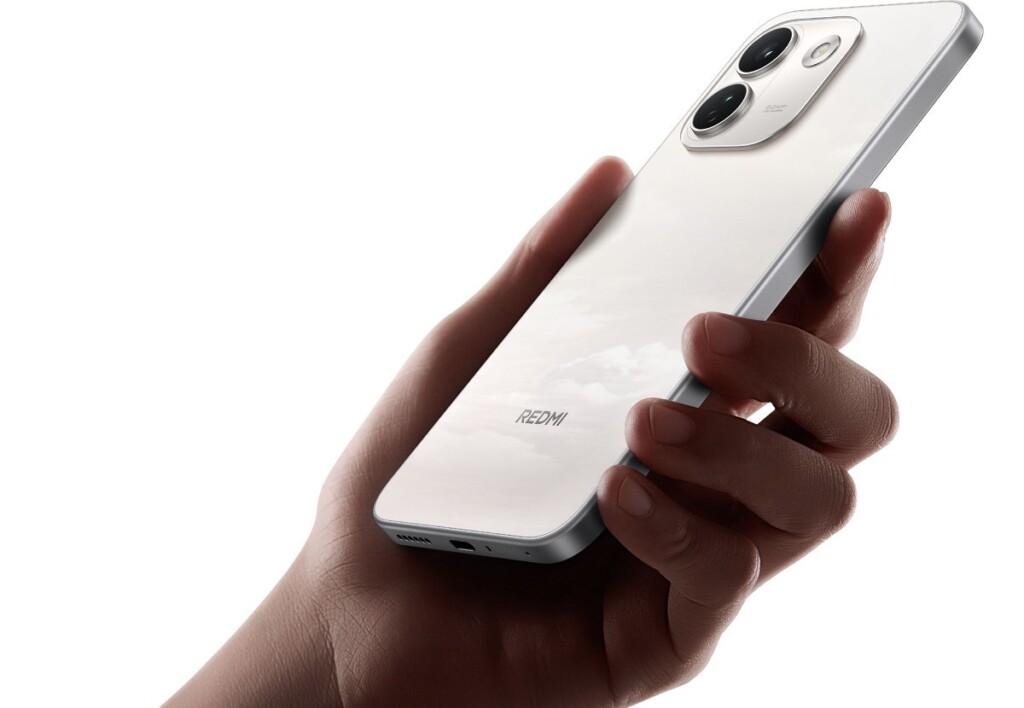
The camera system constitutes one of the most obvious directional changes in the Redmi Note 17 Pro family compared to previous generations. Xiaomi has given up on the 200 megapixel sensors it has used in the last few generations, which also provide advantages in zooming with in-sensor cropping. Instead, both phones have a 50-megapixel main camera with OIS support and an 8-megapixel ultra-wide-angle camera. While a larger sensor with 0.8 micrometer pixel size and f/1.5 aperture is used in the Pro Max’s main camera, the Pro model uses 0.6 micrometer pixels and f/1.8 aperture. This difference can be expected to work in favor of Pro Max, especially in low light, but the loss of cropping flexibility provided by 200 megapixel sensors may be considered a regression for some users.
On the front camera side, Pro Max is distinguished by more powerful hardware. The phone’s 32 megapixel, f/2.2 aperture front camera can record 4K video. Redmi Note 17 Pro has a front camera with 16 megapixel resolution and f / 2.4 aperture. Thus, although the two phones are close to each other in terms of appearance, screen and basic camera layout, Xiaomi; It places Pro Max in a higher position through details such as processor, storage, connection, battery and camera sensor.
Redmi Note 17 Pro and Pro Max come with HyperOS 3 out of the box, and Xiaomi promises six years of security updates for both models. Redmi Note 17 Pro will be offered in five different memory and storage configurations and the starting price will be $ 400. The phone will be available in four color options: Sky Blue, Satin Orange, Purple and Black. Redmi Note 17 Pro Max will have prices starting from $ 500 in four different configurations. Cloud Pink, Green, Purple and Black color options will be available for Pro Max. While the new models offer a significant improvement over the previous generation, especially in terms of battery capacity, the removal of the 200 megapixel camera and the use of older connection standards such as Wi-Fi 5 and Bluetooth 5.1 in the Pro model stand out as the main compromises in the hardware table.
Join Channel