

Meta announced many innovations that expand its wearable device product range at the Connect 2026 event. While the most striking product of the event was Meta VR Glasses, which the company has been working on for a long time, Ray-Ban Meta Audio and the third generation Ray-Ban Meta, which do not use a camera, also appeared on the stage. In addition, Meta Ray-Ban Display is offered for sale in more countries and gains new software features. While the company is developing hearing support for its smart glasses, one of the most comprehensive changes ever is being prepared for Beat Saber. Meta’s plans are not limited to just hardware; gaming, movie, sports and artificial intelligence features are also spreading across a broader portion of the product ecosystem.
Meta VR Glasses will be available next spring with a starting price of $1,300. Weighing approximately 100 grams, the glasses offer a design that is five times lighter than Meta Quest 3. The device, which uses a magnesium alloy frame and pancake lenses, has a 5K screen with full color surround imaging support. While Meta defines the image quality as cinema level, it also includes Dolby Vision and Dolby Atmos spatial sound support. According to the company’s statement, the product will also be the first VR device with IMAX Enhanced certification.
The processing units of the glasses are not located directly in the frame. A separate wired module using the Qualcomm Snapdragon Reality Elite platform contains the storage and battery along with the processor. While Meta promises up to three hours of high-resolution media playback on a single charge, this module supports 45W fast charging. In the first stage, 75 games that can be played with hand gestures will be offered, and all games prepared for Quest can be run if Touch Plus controllers are used. While game streaming via Xbox Cloud Gaming is also supported, users will be able to connect different gaming devices via wireless connection or USB-C.
Meta VR Glasses brings productivity and entertainment on the same device
Meta is not positioning VR Glasses as a product solely for gaming and media consumption. The glasses can be connected to a Windows PC or Mac and controlled via the touchpad with the virtual keyboard created on the table. Physical mouse and keyboard use will also be supported. Holographic avatars, similar to those in Apple Vision Pro, can be used in video calls in applications such as WhatsApp and Zoom. Call participants using traditional screens will also be able to see these holograms; On the side using VR Glasses, spatial audio will match the other person’s voice with their location in the virtual environment.
Meta AI will also be one of the main control methods of the glasses. Users will be able to specify the actions they want to perform with voice commands, and in addition, they will be able to navigate the interface with eye tracking and hand movements. This structure shows that Meta wants to reduce dependence on physical remote controls for controlling the glasses. However, although having the processing hardware in a separate module helps keep the product lightweight, it requires users to carry an additional wired part with them. Media playback time of approximately three hours may also be one of the obvious limitations of the device in terms of long-term use.
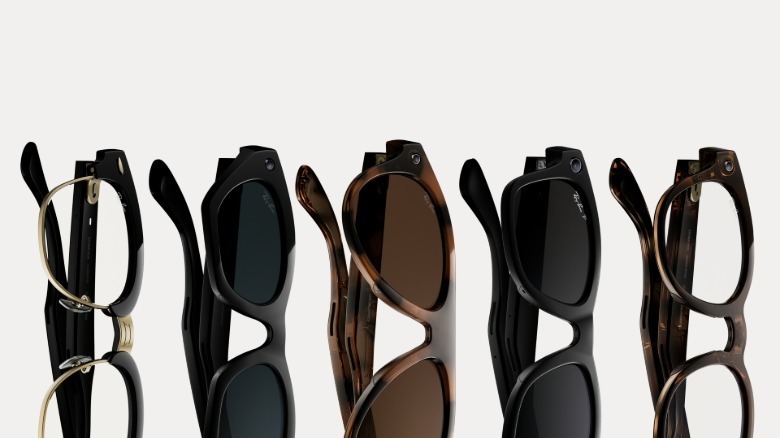
The company also introduced a new smart glasses without a camera at the event. Ray-Ban Meta Audio focuses on audio features rather than photo or video recording, and the Meta AI voice assistant can be used for music, podcasts and phone calls. Offering a working time of up to 12 hours on a single charge, the charging box of the product can increase the total usage up to 48 hours. The model, which weighs 43 grams, has adjustable handle ends, replaceable or adjustable nose pads, and hinges that support over-opening. Prepared with Clubmaster and more angular Burbank frame options, the glasses will be available in 23 different colors and lens combinations and will also support prescription lenses. While pre-orders open on the day of the event, deliveries are scheduled to begin on October 13 and the price starts at $349.
Meta also renewed its camera-equipped Ray-Ban series with the third generation. Ray-Ban Meta Gen 3, which has a slimmer design, has a separate button that directly activates Meta AI. While battery life increases from eight hours to nine hours in the previous generation, it is stated that the six-microphone system can reduce more than 90 percent of background noise. The 12-megapixel camera can record 3K video, and support for video capture with Dolby Atmos spatial sound will be added in the future. The dynamic photo feature will take multiple frames in a row, allowing the user to choose the best photo; Those who wish can also leave this choice to Meta AI.
While the Wayfarer design is preserved in the new generation, classic Aviator and cat-eye Zena options are added to the product range. Ray-Ban Meta Gen 3 is available with a total of 27 color and lens combinations at prices starting from $449. The limited-edition Aviator edition, with a milky beige frame and brown Transitions lenses, starts at $579. There are also special models designed with Kylie Jenner and Blackpink member Lisa, and the price of these options starts from $ 399. Meta is also innovating other eyewear styles in partnership with Essilor Luxottica and expanding reach in different markets.
There are also new options in the company’s own Meta Glasses family. Meta Adventurer is offered with a black frame and gray lenses starting from $ 249, and a charging solution that can be plugged into the box is also included. The limited production Meta Fury model, which uses a transparent frame and mirrored lens, is also added to the product family. Pre-orders for Adventurer open on the day of the event, and store sales are planned to start on October 23.
On the Meta Ray-Ban Display side, both the sales network and software features are expanding. The product, which can now be ordered online in the USA for $799, is sold for £749 in the UK and $1,149 Canadian in Canada. Pre-orders are available in Germany, France and Italy, with prices starting from 899 euros, and deliveries will take place on October 13. Users in the US and Canada will be able to see cycling and transit directions in the headset’s head-up navigation interface starting at the end of the month. During walking, instead of just giving turn instructions, directions can be provided that reference a specific structure or sign in front of the user.
Meta Ray-Ban Display will also support holograms in video calls. Users will need to register themselves in the Meta AI app to create their own avatar. This feature will first be available for WhatsApp calls in the US in the fall. While accessing various web applications is provided through the Meta AI application and the Explore application on the glasses, functions such as on-screen photo editing, Dolby Atmos supported video recording and mirroring of phone notifications on the glasses are also added.
Another feature that will come to Meta’s smart glasses will be hearing support. The company is preparing this system for people who can hear well under normal conditions but have difficulty following conversations in crowded and noisy environments, rather than users who need hearing aids. During setup, different tones need to be listened to in a quiet environment, similar to the hearing features of Apple AirPods, and the glasses personalize their settings accordingly. The system can be turned on and off with the command “Hey Meta, start hearing enhancement”. The feature will first come to Meta Glasses models in the US later in the year, and will later reach Ray-Ban Meta Gen 3 and Ray-Ban Meta Audio. The service, which can be used free of charge for the first 30 days, will require a one-time payment of $ 149 after that, and Meta One subscribers will not pay additional fees.
One of the most comprehensive announcements on the VR gaming side of the event was made for Beat Saber. Beat Games will add hand tracking support to the game in the update to be released in spring, so Touch Plus controllers will no longer be mandatory. Users will be able to continue playing with controllers if they wish. In the new single-player Flux mode, special powers such as the Flux Tether that works between hands will be available. Flux, which will initially feature 35 songs from the Beat Saber catalogue, will be available for both Meta VR Glasses and Meta Quest.
The single-player section of Beat Saber will also be changed with story elements, new missions and a revamped menu system. Thanks to new progression and reward mechanics, the look and sounds of the game can be personalized. Supernatural will return to the Meta Horizon Store in the fall. The developer team, which became independent after Meta’s extensive downsizing in VR and metaverse units at the beginning of the year, continues the project. Former users’ points, streaks and badges will be preserved; New HD environments, exercises and music will be added to the application.
Other gaming announcements include Payday Aces High. The game will come to Meta Quest 3 and 3S later in the year, and will provide co-op multiplayer support with the PC VR version. The public testing process will begin on October 19. While the mixed reality version of Tetris Effect is coming to Meta VR Glasses with hand tracking support next year, Two Point Hospital is also being prepared for Quest 3 and 3S. Phoenix Wright Ace Attorney Dual Destinies will be the first game of the VR side of the series and will come to Meta Quest with Meta VR Glasses next year. Thanks to hand tracking and voice commands, users will be able to point to witnesses and give objection commands directly by voice.
Meta is also expanding its movie and sports content on the VR side. Disney+ subscribers in certain countries will be able to watch movies such as The Avengers and Black Panther in 3D starting from November. Owners of Meta VR Glasses will be able to access VR Enhanced versions of productions such as Avengers Infinity War and Star Wars A New Hope next spring. Disney Immersive Cinema by ILM application aims to watch movies in a more inclusive way by using environmental images, dynamic effects, 3D visuals and spatial sound.
The documentary series Open Season will start on September 29 on the Meta Quest TV application. The production will focus on the therapy sessions of Golden State Warriors player and four-time NBA champion Draymond Green in the 2025-26 season and will be the first production of an original content series called Meta Presents. Later in the year, the company plans to offer hundreds of 2D and 3D movies that users in the US can purchase or rent. This catalog will be expanded to other countries until Meta VR Glasses goes on sale.
While the National Geographic Beyond application offers 180-degree 3D nature experiences, services such as Amazon Prime Video, YouTube, DirecTV, AMC +, Crunchyroll, Plex and Tubi are also available on the platform. Peacock, HBO Max and Paramount+ will provide 3D content. 8K sports broadcasts with a 180-degree field of view will be available on ESPN, and the Immersive Sports program will first start with college American football. The service is planned to be expanded to different sports in 2027. Meta also states that it will offer more than 100 live sports events per year to VR Glasses users through its agreements with MLB, NBC Sports, TNT Sports and UFC.
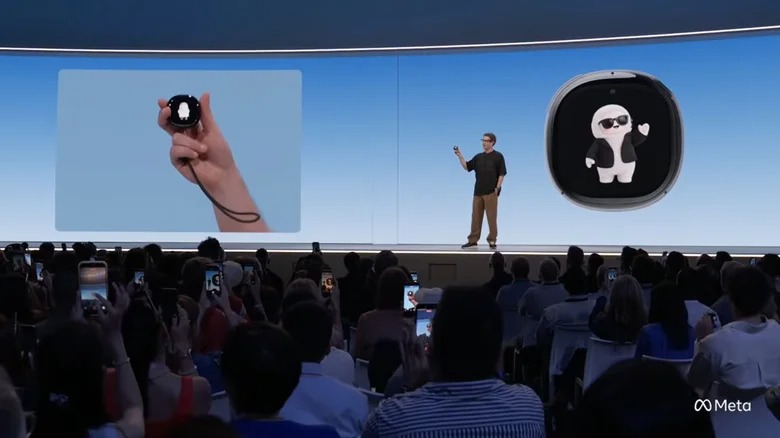
At the end of the event, Mark Zuckerberg also showed off a new device called Muse Charm, about which limited information is available yet. The device, which is large enough to be attached to a keychain, is prepared to directly run the personal Muse Agent and includes a small screen, speakers, microphones and a fingerprint sensor. According to Meta, real-time voice and avatar infrastructure will be able to run in this small hardware and the device can be used as a constantly accessible artificial intelligence assistant. Price, release date and the rest of the specifications have not been announced. The company states that it will share more details about Muse Charm later in the year.
Meta Connect 2026 announcements show that the company is moving its VR headsets to a lighter form of glasses, while also diversifying its Ray-Ban-based smart glasses family according to different usage needs. Meta VR Glasses offers a technically comprehensive product with high-resolution display, Quest game support and PC connectivity; However, its $1,300 price, three-hour stated media usage time and separate processing module may pose some limitations for a wide user base. Ray-Ban Meta Audio, on the other hand, moves towards a simpler usage style with its camera-free design and longer battery life. Meta’s simultaneous expansion of gaming, video, sports and artificial intelligence features reveals that the products in Connect 2026 will be evaluated through an interconnected software and content ecosystem rather than hardware alone.