

The year 2024 will be remembered as a significant turning point in the technology world. Microsoft has managed to make Windows laptops serious competitors to MacBooks thanks to Qualcomm’s new Snapdragon chips. However, AMD is also coming to the stage with its ambitious new chips to take its place in this competition.
At a two-day event held in Los Angeles last week, AMD introduced its new Strix Point Ryzen AI chips. These chips are built on the company’s all-new Zen 5 architecture. Zen 5 is a significant leap forward over AMD’s previous-generation chip architecture, offering more instructions per clock cycle and higher gaming frame rates with just 15W of power.
AMD claims to surpass MacBook performance
At the event, AMD claimed that its new Ryzen chips beat the MacBook Air in multitasking, image processing, 3D rendering, and gaming. It also said that it was 15% faster than the M3 Pro in Cinebench and that it supports up to four displays, unlike the MacBook Air.
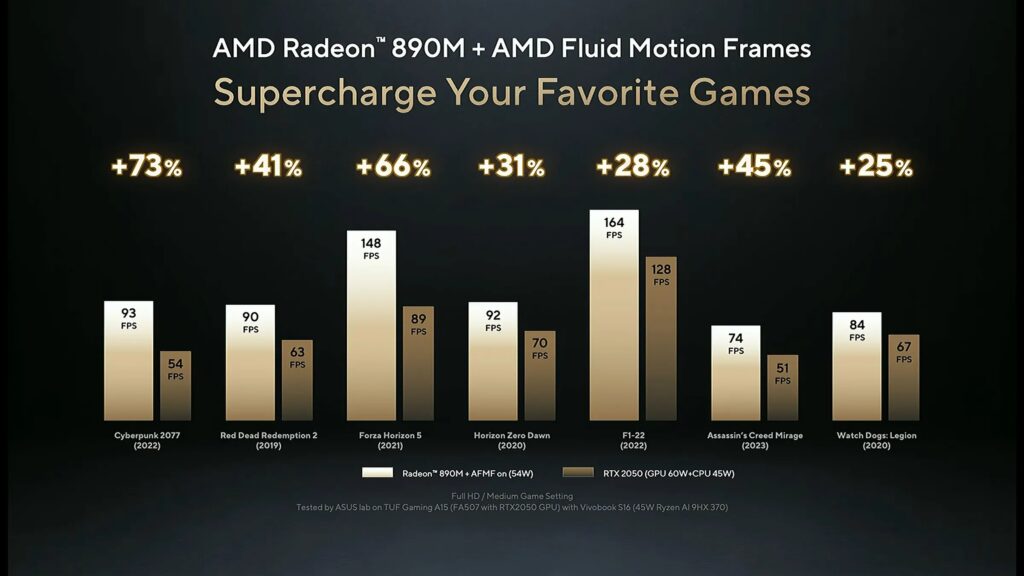
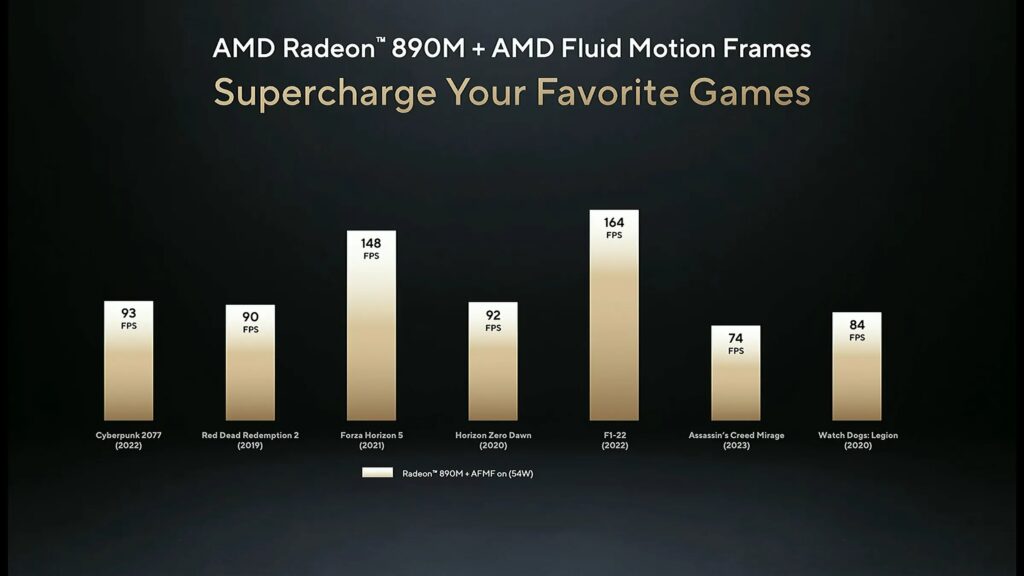
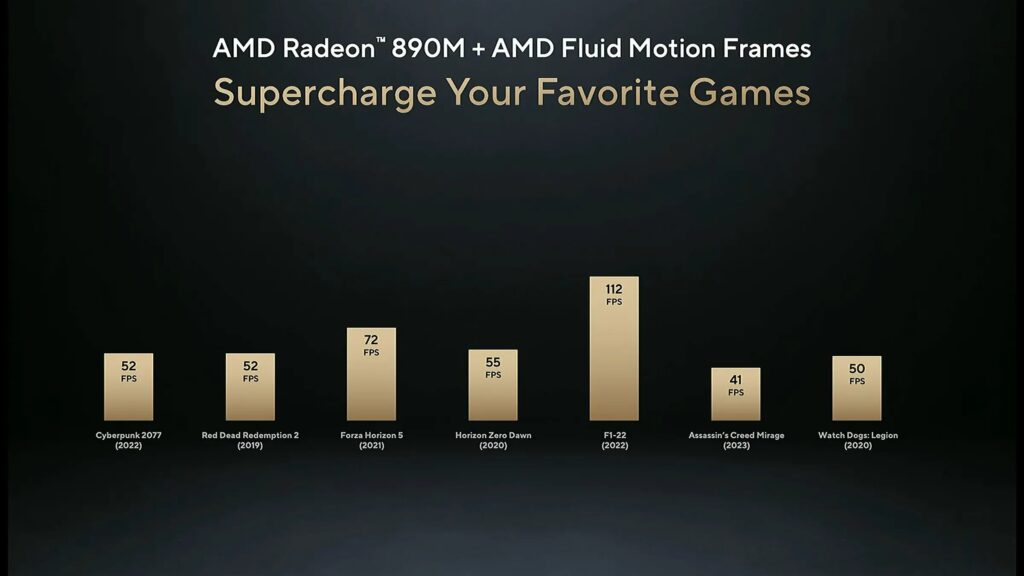
AMD also touted that its new integrated graphics outperform Qualcomm’s current-gen and Intel’s previous-gen chips, and can even “run triple-A games at full HD.” AMD claims its NPU can perform 50 trillion floating-point operations per second, giving it more performance than rivals coming out this year.
However, it’s not possible to verify these claims at this time. It wasn’t possible to observe the performance of AMD’s new Ryzen AI chips at the event. Most AI demos weren’t running on AMD’s NPU, and even the most powerful gaming laptop shown was running on Nvidia graphics cards.
Increased performance with Zen 5 architecture
Ryzen AI chips are said to be significantly faster than AMD’s previous-generation laptop chips. AMD says the new Zen 5 CPU architecture offers an average of 16% more instruction processing capacity. Additionally, the new RDNA 3.5 GPU architecture provides 19% to 32% more graphics performance at 15 watts of power.
AMD has been reluctant to provide specifics on battery life, despite the theoretical efficiency of its new chips. At the event, it said battery life would last “all day,” meaning eight hours or more. However, that has long been the norm for many thin-and-light laptops.
Asus’ Zenbook S16 mirrors AMD’s thin and light design ambitions. However, it’s not as light and thin as the MacBook Air. At 1.5kg and 1.15cm thick, the Zenbook S16 is the same weight and thickness as the 15-inch Air.
AMD claims its 50 TOPS NPU is five times faster than Intel’s Meteor Lake, but current demos haven’t shown that performance. The AI programs shown were mostly running on the CPU or integrated graphics.
AMD’s Strix Point Ryzen AI chips with the new Zen 5 architecture are set to launch on July 28. With MacBooks and Snapdragon laptops taking over the market, the competitiveness of AMD’s x86 Zen 5 architecture is of utmost importance. If AMD succeeds, the pressure will be even greater ahead of Intel’s Lunar Lake release. However, if AMD fails, Intel will have to prove that its older PC chips are still competitive.