

Google, tonight at 20.00 Türkiye time He clarified the path Android will follow this year at the Android Show I/O Edition event he organized. Company, Gemini Intelligence It introduced the artificial intelligence layer it calls to phones, automobiles, watches, laptops and XR glasses. Thus, Android has moved from being a mobile platform where only applications run, to a smarter experience that tracks work across devices.
The most prominent title at the event was Gemini Intelligence, but Google did not stop there. Googlebook, Android Auto, QuickShare, RCS messaging, Chrome for Android And Android 17 He showed many innovations for In addition, the company also announced that it will limit some features to certain devices, countries, languages and subscription plans in the first stage.
Gemini Intelligence is at the heart of Android
Google is preparing a more effective assistant experience within Android with Gemini Intelligence. This system will keep track of multi-step jobs, move necessary information between applications, and leave final approval to the user before the process is completed. Company debut on the latest Samsung Galaxy and Google Pixel phones He announced that he would launch it in the summer.
In addition, Gemini Intelligence will read the content on the screen and recommend action accordingly. In the examples given by Google, Gemini can turn a shopping list into a delivery cart or find class information in Gmail and add the necessary books to the cart. These examples aim to reduce the frequent steps of copy, paste, and app switching on Android.
On the other hand, Google does not limit Gemini Intelligence only to phones. The company plans to bring this experience to watches, automobiles, glasses and laptops within the year. Therefore, Android Show 2026 presented a much broader ecosystem narrative than a single phone update.
Chrome for Android becomes more functional with Gemini
Google is adding Gemini support directly to the browser experience in Chrome for Android. By tapping the Gemini icon in the toolbar, users will be able to ask questions about the open web page, have long content summarized, and get explanations for complex topics. For the first stage, Google Android 12 or newer, at least 4 GB RAM and set the terms for US English.
However, one of the most important innovations on the Chrome side is called auto browse. This feature will facilitate web transactions such as making appointments, making reservations, updating orders, and more on behalf of the user. Google will ask for user approval in sensitive steps and will extend the security protections on the desktop to the Android side.
However, auto browse will not reach everyone at the same time. Google will initially open this feature for AI Pro and Ultra subscribers in the USA. A clear calendar has not been shared for users in Türkiye, so the Gemini experience on the Chrome side will be limited at first.
Googlebook brings Android to laptop
One of the newest product headlines of Android Show 2026 Googlebook happened. More than 15 years after Chromebook, Google introduced a new category on the laptop side. Googlebook brings together Android’s Google Play app ecosystem with the browser power of ChromeOS.
In addition, Google states that it has redesigned Googlebook devices for Gemini Intelligence. magic pointer The feature will offer contextual suggestions when the cursor hovers over a date, image or text on the screen. For example, it will be possible to convert a date in an e-mail into a meeting or to interpret two images on the screen together.
Google has not yet shared full hardware details for the Googlebook. The company will provide more information later in the year and will launch the first Googlebook models in the fall. Therefore, it is necessary to wait for the official announcement regarding price, processor, screen options and Türkiye release for now.
Android Auto offers a more visual driving experience
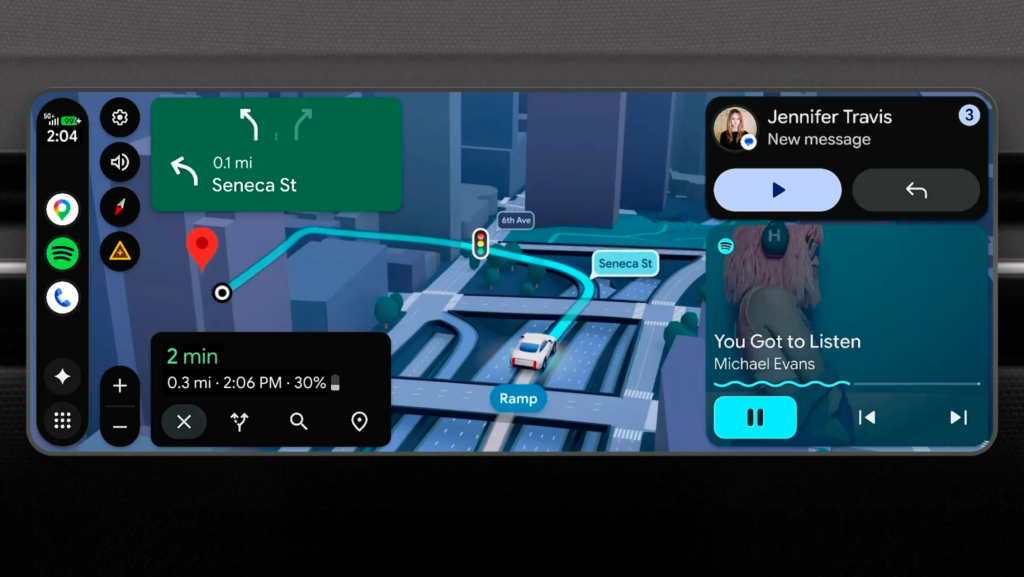
Google is renewing both the interface and navigation experience on Android Auto. The company is on the road More than 250 million Android Auto compatible cars announced that it was found. In addition, cars carrying Google built-in, More than 100 models in 16 brands It seems to have arrived.
The new Android Auto interface will better adapt to different vehicle screens. Google brings end-to-end Google Maps view, Material 3 Expressive design language and widget support on the vehicle screen. Thus, the map, music, calendar and quick information will be available on a more organized driving screen.
In addition, on the Google Maps side Immersive Navigation feature is coming. This feature will show buildings, overpasses, terrain details, lanes, traffic lights and stop signs in a 3D view. It will be easier to read the map, especially at complex intersections and urban driving.
Full HD video and Dolby Atmos coming to cars
Android Auto is not only renewed on the navigation side, but also the entertainment experience is expanded. Google provides support for parked cars through applications such as YouTube. 60fps Full HD video will offer support. This feature opens up a practical area of use, especially for electric car users waiting for charging.
The first brands supported include BMW, Ford, Genesis, Hyundai, Kia, Mahindra, Mercedes-Benz, Renault, Škoda, Tata and Volvo. When the vehicle moves, supporting applications will switch the video to audio mode. So a video podcast or long content will continue in audio form while you drive.
On the other hand, Google is also preparing Dolby Atmos-supported spatial audio support for Android Auto. This innovation will work with certain applications and compatible cars. Google will also share which models will receive this support on a brand and vehicle basis.
Quick Share will work more compatible with AirDrop
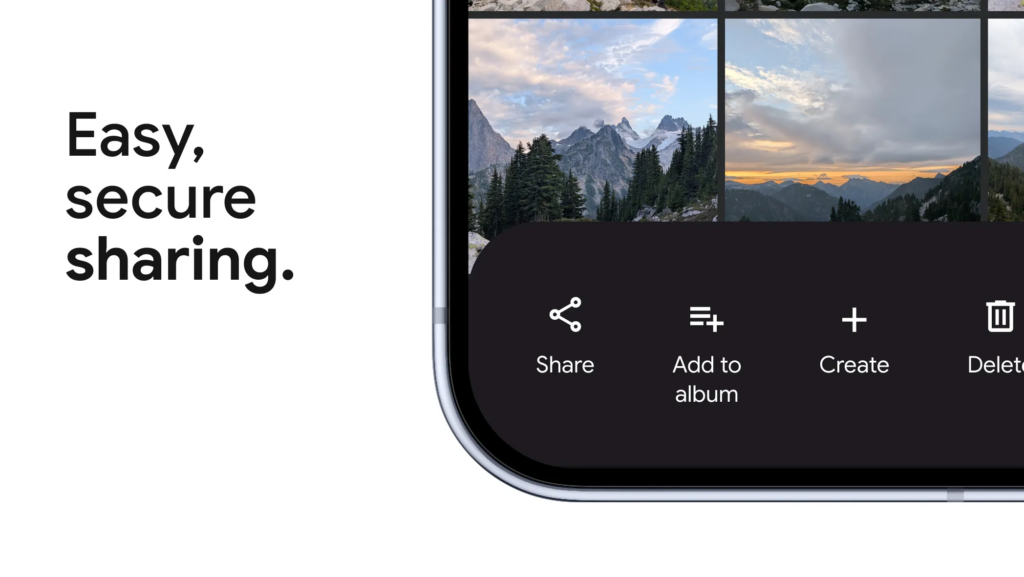
Google has taken an important step for Quick Share, making sharing between Android and iOS easier. The company announced that Quick Share will be compatible with AirDrop on supported Android phones. This support will expand to Samsung, OPPO, OnePlus, Vivo, Xiaomi and HONOR models after Pixel.
In addition, Google offers a QR code sharing option for users who do not have compatible devices. Quick Share will send files to iOS devices via the cloud via QR code. Google plans to deliver this feature to all Android phones within a month, starting today.
This innovation will bring a simpler sharing process for families, business teams and students who use mixed devices. Google also aims to bring Quick Share into popular applications such as WhatsApp. Thus, the sharing tool will be more visible not only in the system menu but also in daily used applications.
Switching from iPhone to Android gets easier
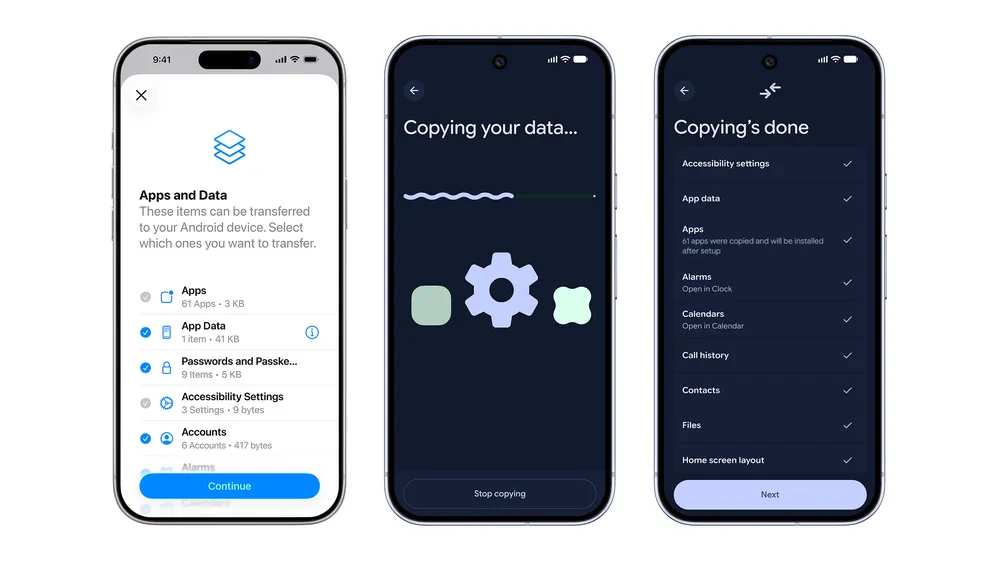
Google also renewed the transition process from iPhone to Android. The new transfer tool will transfer passwords, photos, messages, applications, contacts, home screen layout and eSIM information wirelessly. The company will launch this experience on Samsung Galaxy and Google Pixel devices first.
However, this innovation will provide significant convenience for users who want to switch to Android but are hesitant about the data migration process. The transition process, which previously proceeded between cable, backup and account settings, will become shorter and more understandable with the flow explained by Google. Especially eSIM transfer is important in terms of reducing operator transactions.
Google specifically states that the home screen layout will also be moved during the transition. This detail will reduce the hassle of relocating apps after switching to a new device. You will get a more familiar start screen with photos, messages and contacts.
RCS messaging gets stronger across Android and iOS
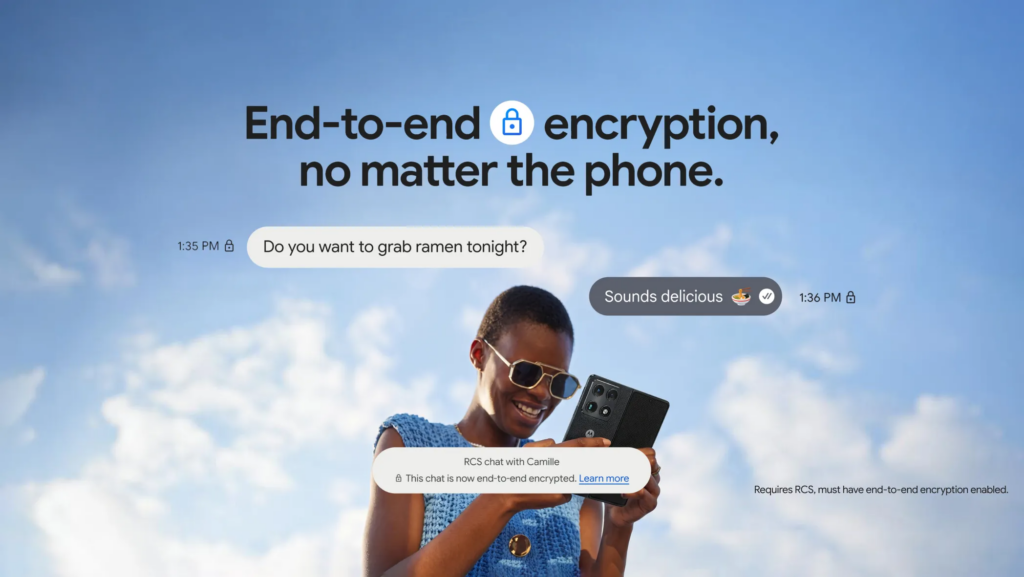
Google touted end-to-end encryption support for RCS messaging between Android and iOS. According to the last 28-day average, the company 2.5 billion RCS messages announced that it was sent. This volume shows why the security side of cross-platform messaging comes to the fore.
In addition, RCS offers a more advanced experience than SMS. Features such as better quality media sharing, read receipts and writing indicator make messaging between Android and iPhone more useful. End-to-end encryption support also adds an important layer to protect private messages.
After Apple launched RCS support on iOS, Google increased its emphasis on secure messaging. Although this title seems short at Android Show 2026, it touches a wide range of users in terms of daily communication. Users who message between different platforms, especially in family and business groups, will see this innovation more frequently.
Android 17 focuses on content creators
Android 17 comes with new tools for content creators. Screen Reactionswill combine the screen recording and the image taken from the front camera in the same video. Google will launch this feature first on Pixel devices in the summer.
Additionally, Google and Meta are working together to make the Instagram experience better on Android’s most advanced devices. Ultra HDR capture and playback, built-in video stabilization, Night Sight integration and optimized loading pipeline are included in this package. Users who shoot in low light and upload their content directly to Instagram will especially notice these changes.
Google is also adding Android-specific smart enhancement and audio separation tools to the Edits app. Adobe Premiere application will soon be available on Android tablets. Thus, short video production, tablet-oriented editing and social media sharing will gain a more complete flow on the Android side.
Android XR glasses join the ecosystem
Google clearly showed at Android Show 2026 that Gemini Intelligence will not be limited to phones and computers. The company positions Android XR-based glasses alongside Gemini. These glasses will provide instant assistance to the user by interpreting objects, texts and directional information seen in the environment.
However, Android XR still seems to be the furthest title for the everyday user. Google stated that it will share more details in this area during the I/O week. For now, the company’s goal seems to be to take the Android experience out of the phone and run it seamlessly between glasses, watches, cars and computers.
Although the information on the XR side is more limited, when considered together with Gemini Intelligence, a circle is formed that completes the entire news. Titles such as phone, browser, automobile and laptop seem more concrete today. Glasses show which device classes Google wants to bring Android to.
Instead of announcing a single major Android release at Android Show 2026, Google offered a Gemini experience that works on different devices. Galaxy and Pixel models stood out on the phone side, Googlebook opened a new category on the computer side, and Android Auto became more visual and entertaining on the automobile side. Quick Share, RCS and the transition from iPhone to Android were among the changes that will be encountered more frequently in daily use.
Make Teknoblog your preferred source on Google Search and see us more often in Top News.
In order not to miss the technology agenda, 📰 add it to Google News, 💬 join our WhatsApp channel, ▶ subscribe to YouTube, 📷 follow us on Instagram and 𝕏 X.